Aró Digital Strategy redesigned how customer work flows across its business, combining Lean process improvement, Atlassian technology, automation and carefully applied AI. The transformation improved service responsiveness, strengthened operational visibility and identified more than 3,240 hours of annual productive capacity—while building the internal capability needed to sustain the change.
This customer success story is based on project information and results supplied for review by Aró Digital Strategy and Dadakai.
About Aró Digital Strategy
For more than 25 years, Galway-based Aró Digital Strategy has helped independent and luxury hotels compete and grow through digital strategy, technology and marketing.
Today, the company works with more than 300 hotel partners, supported by teams spanning web, engineering, digital marketing, account management, finance and customer support.
As Aró grew, the work behind delivering that service became more complex. Customer requests had to move across multiple teams. Information needed to be interpreted, routed and tracked. Knowledge had to be reused effectively, while operational data needed to support better decisions about capacity, cost and profitability.
The opportunity was larger than replacing one software system. Aró wanted to build a smarter operating model that could support its next stage of growth.
The challenge: improve flow without simply digitising complexity
Aró examined how customer requests entered the organisation, how work was triaged and assigned, how knowledge was reused and how time and operational information were captured.
The review highlighted several connected challenges:
- Inconsistent request intake
- Manual interpretation and routing
- Ageing work and limited visibility
- Disconnected processes and information
- Opportunities to reuse knowledge more effectively
- Administrative effort associated with time capture and tool switching
Moving an inefficient process into a new platform would have preserved many of these problems. The transformation therefore began with the work itself: how demand arrived, where decisions occurred and what teams needed to deliver value consistently.
Starting with Lean process improvement
Working with Dadakai through a LeanPlus transformation programme supported by Údarás na Gaeltachta, Aró used a process-led approach.
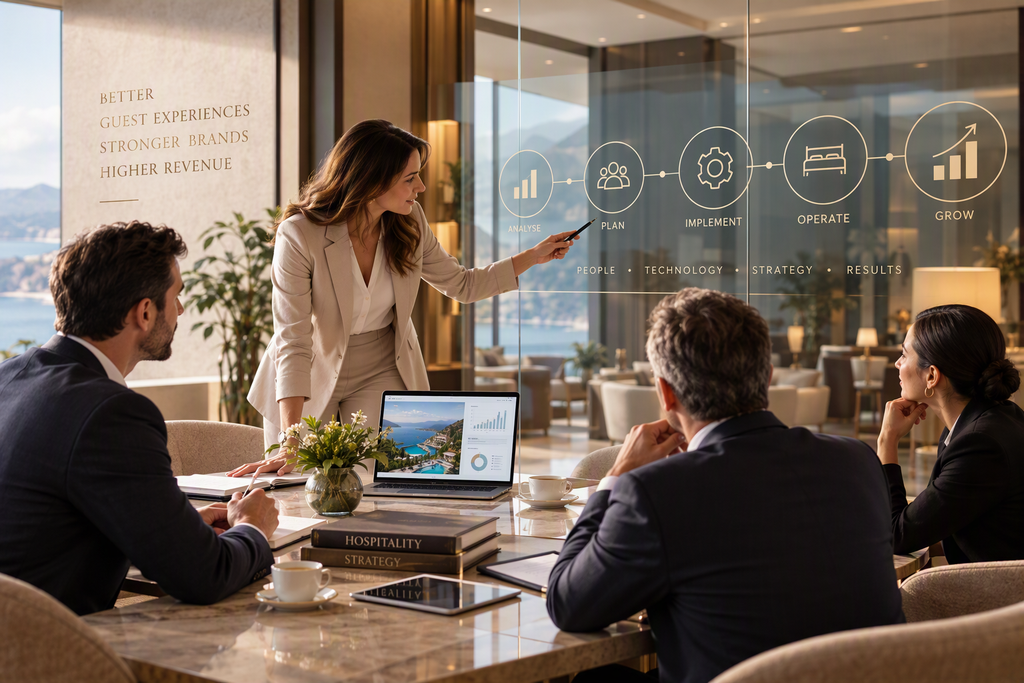
The teams applied Lean Six Sigma DMAIC—Define, Measure, Analyse, Improve and Control—to understand the current workflow before redesigning it. This created a disciplined way to distinguish symptoms from causes, involve the people closest to the work and define a more effective future state.
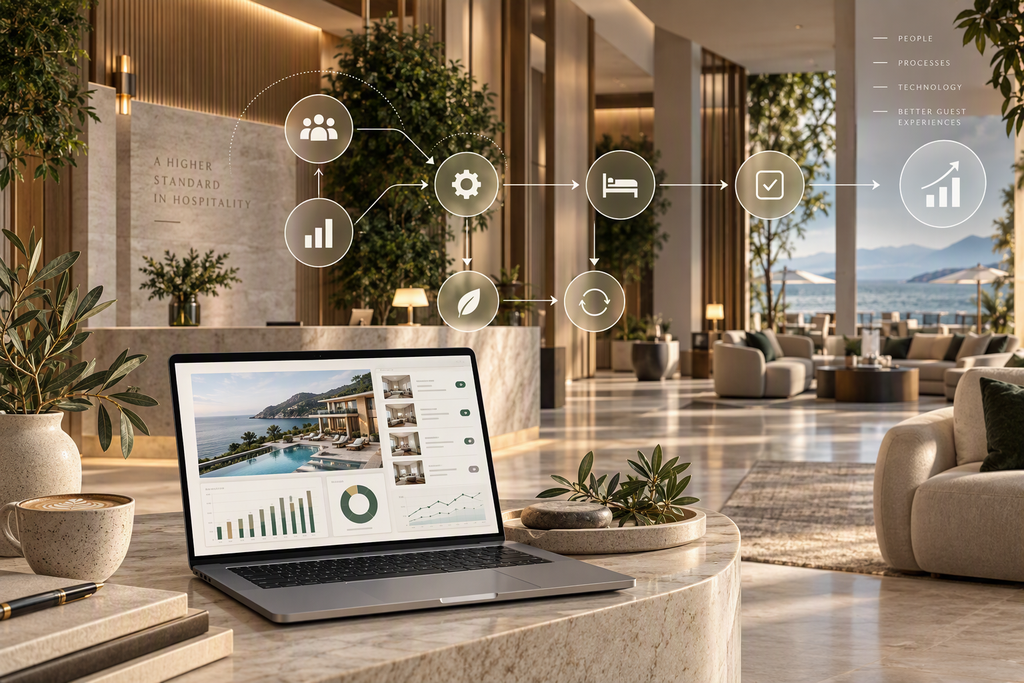
The principle was simple: simplify the work before automating it.
This approach reflects Dadakai’s wider work in workflow improvement and capacity creation: technology produces stronger results when it supports a clearly understood operating model.
Creating a clearer customer-service operating model

The redesigned model was built around Customer Service Management practices and Atlassian tools. It introduced structured request types, clearer ownership and an intake-and-triage layer before specialist teams became involved. Requests could be validated and routed before reaching Web, Development, Digital Marketing or other specialist teams. Structured information, automation and AI-assisted classification reduced the manual interpretation previously needed to understand and direct incoming work.
The result was a clearer journey from customer request to resolution. It also helped protect specialist capacity for work where expertise creates the greatest value.
Using AI where it helps people work better
AI was introduced as part of the redesigned process rather than treated as the starting point.
AI-assisted intake and triage now support routine classification and response preparation. Human review remains in place before customer communication. Knowledge-base content and standard response patterns provide additional support for consistency and reuse.
This human-centred model gives Aró a foundation for moving capacity away from repetitive reactive activity and towards knowledge creation, client enablement, onboarding and continuous improvement.
It also illustrates a practical principle explored in Dadakai’s guide to AI process automation: introduce AI where it improves a well-designed workflow, with people retaining appropriate oversight.
Connecting work, time and operational information
The transformation extended beyond customer support. Jira, Confluence and Tempo now connect time entries more directly with work items, clients and activity categories.
This provides better information for capacity, cost and profitability analysis. For leadership, the operating model is not only designed to move work faster. It is also designed to make work more visible and measurable.
Measured impact
The new operating model has produced measurable improvements in service flow and identified capacity for higher-value work.
| Result | Reported impact |
|---|---|
| First-response time | Approximately 50% improvement since the introduction of AI-assisted triage. |
| Incoming ticket volume | The service model is resolving 93% of incoming ticket volume, helping the team maintain greater control over demand. |
| Resolution time | Average ticket resolution time reduced to just over six days, compared with an average ticket age of 84 days in the previous system. |
| Annual capacity | Approximately 3,240 hours of productive capacity identified through streamlined administration, simpler time capture and reduced tool switching. |
The estimated annual capacity is equivalent to nearly two additional full-time employees’ productive capacity without increasing headcount.
Building capability beyond the project
The most important outcome was not a change of tools. Aró now has documented processes, standard operating procedures, Lean playbooks, continuous-improvement templates, training materials and governance routines designed to help its people continue improving the operating model.
Aró’s teams were central to the change. Executives and people closest to the day-to-day work contributed their experience, challenged assumptions, proposed ideas, tested new ways of working and provided feedback as the model developed.
Rather than receiving a process designed elsewhere, team members helped shape it around the realities of their work. Supported by Lean structures, coaching and governance, the new ways of working became something Aró’s people could own and extend.
That emphasis on internal ownership is central to Dadakai’s approach to capability-building consulting: the value of a transformation should continue after the project ends.
“At Aró Digital Strategy we’ve always believed that great customer service comes from great people. Through a Lean Plus transformation programme supported by Údarás na Gaeltachta, we took the opportunity to redesign key processes, improve how work flows through the business and introduce new ways of using data, automation and artificial intelligence.
We are responding to customers faster, making better use of data and automation, and creating more capacity for our teams to focus on high-value work. The introduction of AI across areas such as ticket triage, knowledge management and customer communications is helping us reduce administration and improve consistency, while ensuring our people remain focused on solving customer problems.
Most importantly, it has strengthened our ability to scale while continuing to deliver the level of service our hotel clients expect. Dadakai brought a thoughtful and practical approach throughout the project. Rather than focusing only on processes and tools, they helped us build capability within the team, creating positive change that will continue to benefit the business long after the project itself has finished.”
Triona MacGiollaRí, Bainisteoir / Director, Aró Digital Strategy
Dadakai’s role in the transformation
Daniele worked alongside Aró’s teams to structure and facilitate the Lean programme, redesign workflows, design and deliver training, support technology adoption, develop internal capability and establish governance for continuous improvement.
The engagement combined Lean thinking, team coaching, process improvement, technology and AI adoption, training and practical implementation. The focus was not simply to introduce tools, but to strengthen the operating disciplines behind the results:
- Clearer work intake and ownership
- More consistent processes
- Better use of automation and AI
- Stronger operational visibility
- A structured approach to continuous improvement
- Internal capability to sustain and extend the changes
Build a smarter operating model for growth
Technology, automation and AI create lasting value when they are connected to simpler processes, capable people and visible management routines.
Dadakai can help organisations examine how work flows, identify avoidable complexity, introduce appropriate technology and build the internal capability needed to sustain improvement.
Book a free call with Dadakai to discuss your organisation’s workflow, capacity or transformation goals.